Project Description
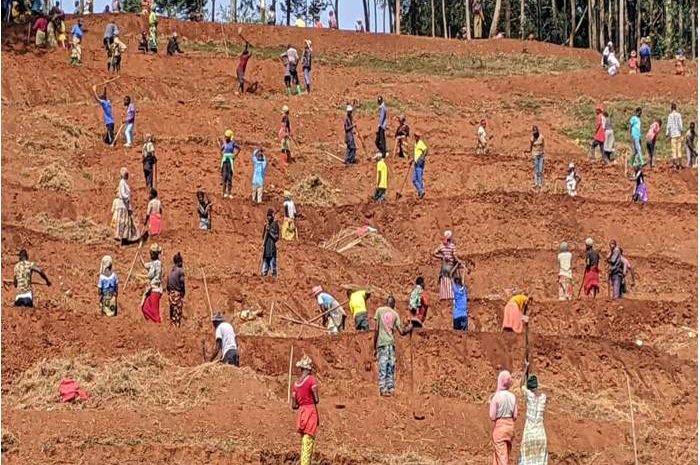
REDO has been implementing the Lake Kivu Belt Sustainable Conservation through Forest Landscape Restoration and Radical Terracing Establishment in Rusizi District to restore degraded landscapes, protect the Lake Kivu ecosystem, and enhance community resilience. With financial support from the Global Nature Fund (GNF) and the International Climate Initiative (IKI), and building on ongoing initiatives under TerraFund, the project focuses on restoring 725 hectares of land through sustainable agroforestry practices and establishing 16 hectares of radical terraces on steep slopes to reduce soil erosion and prevent sedimentation in the lake. The project engages 1,500 farming households across Gashonga Sector in activities such as tree planting, riparian buffer restoration, soil conservation, and capacity building programs. Special attention is given to empowering women and youth groups through training and the development of nature based enterprises, promoting inclusive participation and long term livelihood sustainability. To date, 140,000 trees including fruit and agroforestry species have been planted to support forest restoration, biodiversity conservation, and sustainable agriculture. These interventions are designed to integrate environmental restoration with community development, contributing to the protection of Lake Kivu, strengthening local livelihoods, and supporting Rwanda’s broader environmental conservation and climate resilience goals.
Achievements
Since 2024, the Lake Kivu Belt Sustainable Conservation through Forest Landscape Restoration and Radical Terracing Establishment in Rusizi District project has achieved significant results in landscape restoration, community engagement, and environmental conservation. A total of 725 hectares of land have been restored through sustainable agroforestry practices, including 16 hectares of steep land rehabilitated with radical terracing to reduce soil erosion and prevent sedimentation in Lake Kivu. In addition, 140,000 trees, including fruit and agroforestry species, have been planted to enhance forest cover, biodiversity, and sustainable agriculture. The project has directly benefited 1,500 farming households in Gashonga Sector by engaging them in tree planting, riparian buffer restoration, and soil conservation activities. Women and youth groups have been empowered through training programs and the development of nature based enterprises, promoting inclusive participation and long-term livelihood sustainability. These achievements contribute to the protection of Lake Kivu, strengthen community resilience, and support Rwanda’s broader environmental conservation goals.
Project Area: Rusizi district,Gashonga sector,Kabakorwa,Rusayo and Buhokoro cells
Status : Ongoing
Project duration: 2024-2026
In Collaboration with